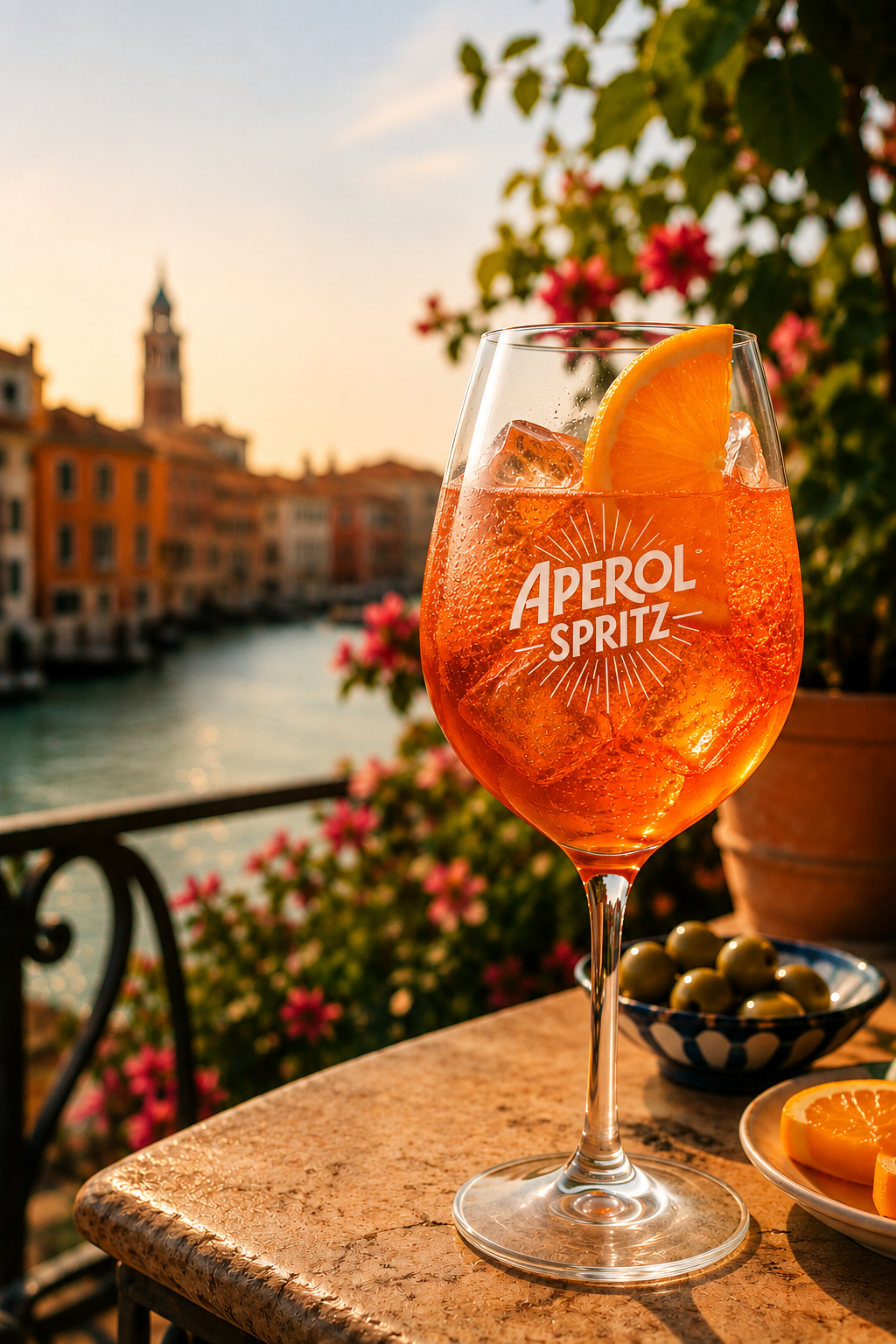
Aperol is more than just a liqueur
Bright orange Aperol is not merely an Italian liqueur. Today, it has become virtually synonymous with the Spritz cocktail, summer, and the Italian “aperitivo” tradition.
However, the story of Aperol began long before millions of people started ordering Spritz cocktail in bars around the world.
The Origins of Aperol
Aperol hails from the city of Padua (Padova) in the Veneto region of northern Italy.
In the early 20th century, brothers Luigi and Silvio Barbieri—working at the distillery owned by their father, Giuseppe Barbieri—set themselves a goal: to create a modern aperitif that was lighter than most Italian bitters available at the time and more pleasant to drink on warm summer evenings.
In 1912, they began experimenting with ingredients and production methods; seven years later, in 1919, a new—and indeed innovative—drink was born: Aperol.
Its very name, derived from the French word “aperitif” (the Barbieri brothers may well have been inspired by their travels in France), highlighted the drink’s lightness and its purpose: to stimulate the appetite before a meal, rather than concluding it as other strong, bitter liqueurs did.
What Made Aperol Special from the Start
Aperol stood out from most Italian bitters of the early 20th century due to the following characteristics:
- an alcohol content of just 11%, making it suitable for a daytime aperitif;
- a vibrant orange color;
- a distinct citrus aroma;
- a gentle bitterness;
- high drinkability.
After World War I, Aperol rapidly gained popularity—first in Padua, then throughout the Veneto region—and by the 1920s and 1930s, it could be found almost in every bar in Northern Italy.
What Aperol is made of
Its exact composition has been kept secret for over a century and still is.
All that is known is that it contains more than 30 ingredients, including:
- sweet and bitter oranges;
- rhubarb;
- gentian;
- various aromatic herbs;
- botanicals and spices.
It was the harmonious blend of citrus sweetness and delicate herbal bitterness that made Aperol a pleasant, smooth drink that quickly became popular.
The history of the Spritz predates Aperol
The Aperol Spritz is not a standalone cocktail that originated in the 20th century, as many believe.
Originally, the concept of the “Spritz” had no connection to Prosecco, Aperol, or any other liqueur used in modern Spritz cocktails.
After Napoleon’s army retreated in the early 19th century, the Italian region of Veneto fell under the control and influence of the Austro-Hungarian Empire. Austrian soldiers and officials stationed in Veneto didn’t appreciate local wines, considering them too full-bodied and strong. Consequently, they diluted the local Italian wines with a splash of water, calling the resulting drink “ein Spritzer”—derived from the German verb “spritzen”, meaning “to splash” or “to spray.”
Thus, the Spritz—wine diluted with water—was born. Later, still water was replaced by soda water, and eventually, sparkling wines—primarily Prosecco—came into use.
It was then that the Spritz gradually evolved into a cocktail—or rather, an entire family of cocktails.
When the Aperol Spritz Appeared
Aperol itself had already existed as a standalone product for decades before becoming the base of the famous cocktail.
The classic Aperol Spritz recipe emerged only in the 1950s, combining three ingredients:
- Aperol, which replaced wine—a role it was perfectly suited for thanks to its low alcohol content;
- Prosecco;
- Soda water.
The brand launched its first large-scale advertising campaigns in the 1950s and 60s, including the “Il Carosello” TV commercials featuring famous Italian actors. It was this recipe that made Aperol world-famous, particularly following international advertising campaigns in the 1980s.
Why the Aperol Spritz Became a Global Phenomenon
Aperol quickly gained popularity in Italy, but it began to achieve international renown after 2003, when the brand became part of the Campari Group.
The company launched a massive international promotion effort:
- developing “aperitivo” culture;
- global advertising campaigns;
- partnerships with restaurants and bars;
- promoting the Italian lifestyle.
In 2006, Aperol and “aperitivo” culture arrived on the US market, and the Aperol Spritz transformed from a regional cocktail from the Veneto area into one of the world’s most famous aperitifs.
The Classic Aperol Spritz Recipe
The official formula is extremely simple and is known as the “3–2–1 rule”:
- 3 parts Prosecco DOC
- 2 parts Aperol
- 1 part soda water
The cocktail is prepared directly in a large wine glass filled with ice. It is garnished with an orange slice. This ratio results in a light drink, refreshing and well-balanced.
What to pair with an Aperol Spritz
The Aperol Spritz is, first and foremost, an aperitif. Best food pairings:
- green olives;
- prosciutto (and other cold cuts: jamón, coppa, cured meats, etc.);
- bruschetta with various toppings (tomatoes, pesto, fresh basil, stracciatella);
- seafood;
- fried shrimp;
- calamari;
- burrata;
- mozzarella;
- salted peanuts;
- potato chips;
- light Venetian-style snacks (“cicchetti”).
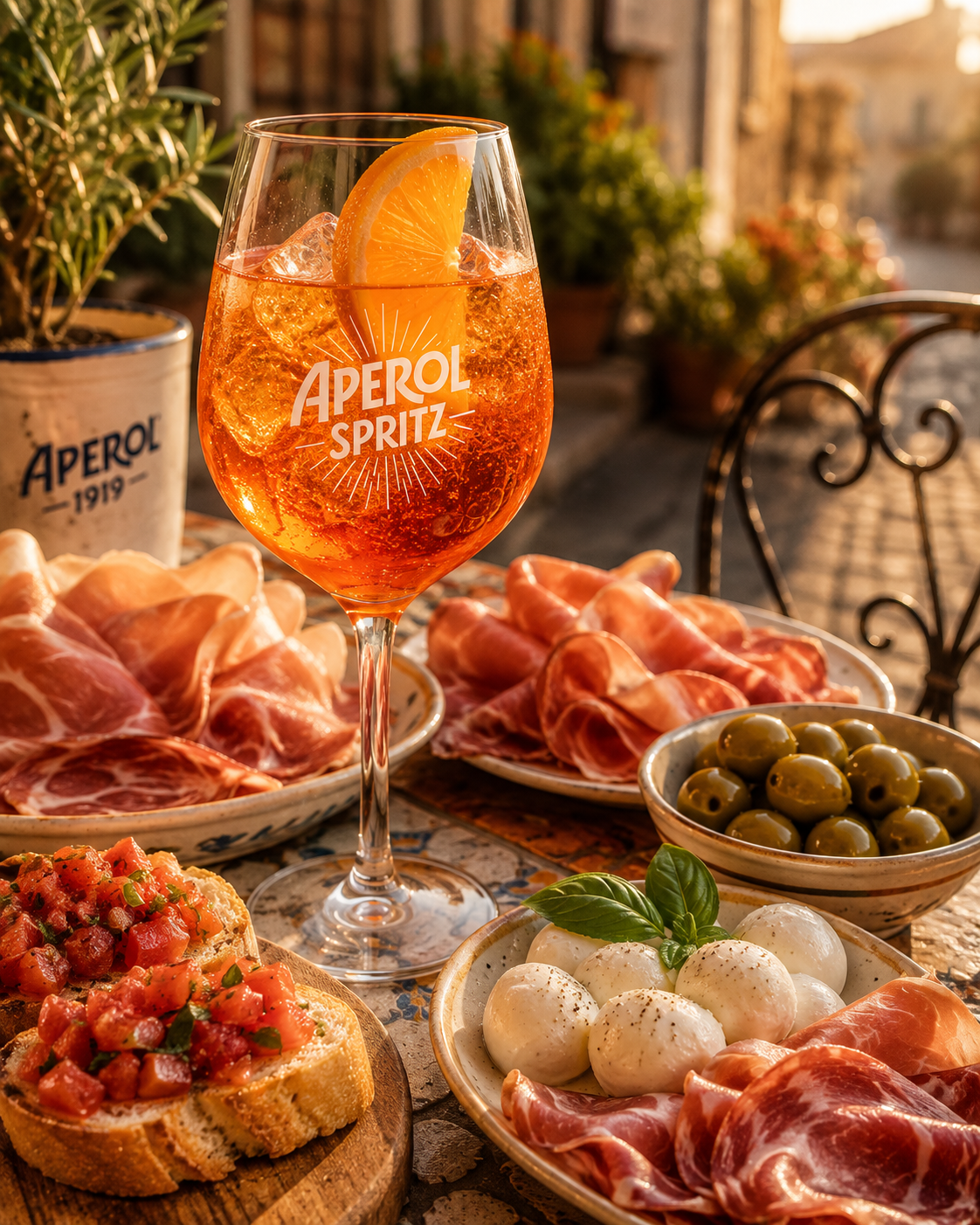
Aperol’s moderate bitterness stimulates the appetite, making the cocktail an ideal start to a meal.
Interesting facts about Aperol
- It took seven years to develop Aperol.
- The recipe, consisting of over 30 ingredients, has been kept secret since its creation.
- Aperol has an alcohol content of just 11%, significantly lower than most classic bitters.
- The Aperol Spritz emerged several decades after the liqueur itself was created.
- The Aperol Spritz cocktail gained worldwide popularity thanks to the Campari Group’s global marketing strategy following its acquisition of the brand in 2003.
Conclusion
The story of Aperol is quite unique and significant for the entire alcoholic beverage industry. Created in Padua in 1919 by the Barbieri brothers, this liqueur not only revolutionized the concept of traditional bitters but also spawned an entire category of cocktails and became a global ambassador for “aperitivo” culture.
Today, the sparkling orange-red Aperol Spritz has become a symbol of vacations, summer, and warm evenings spent on café terraces.