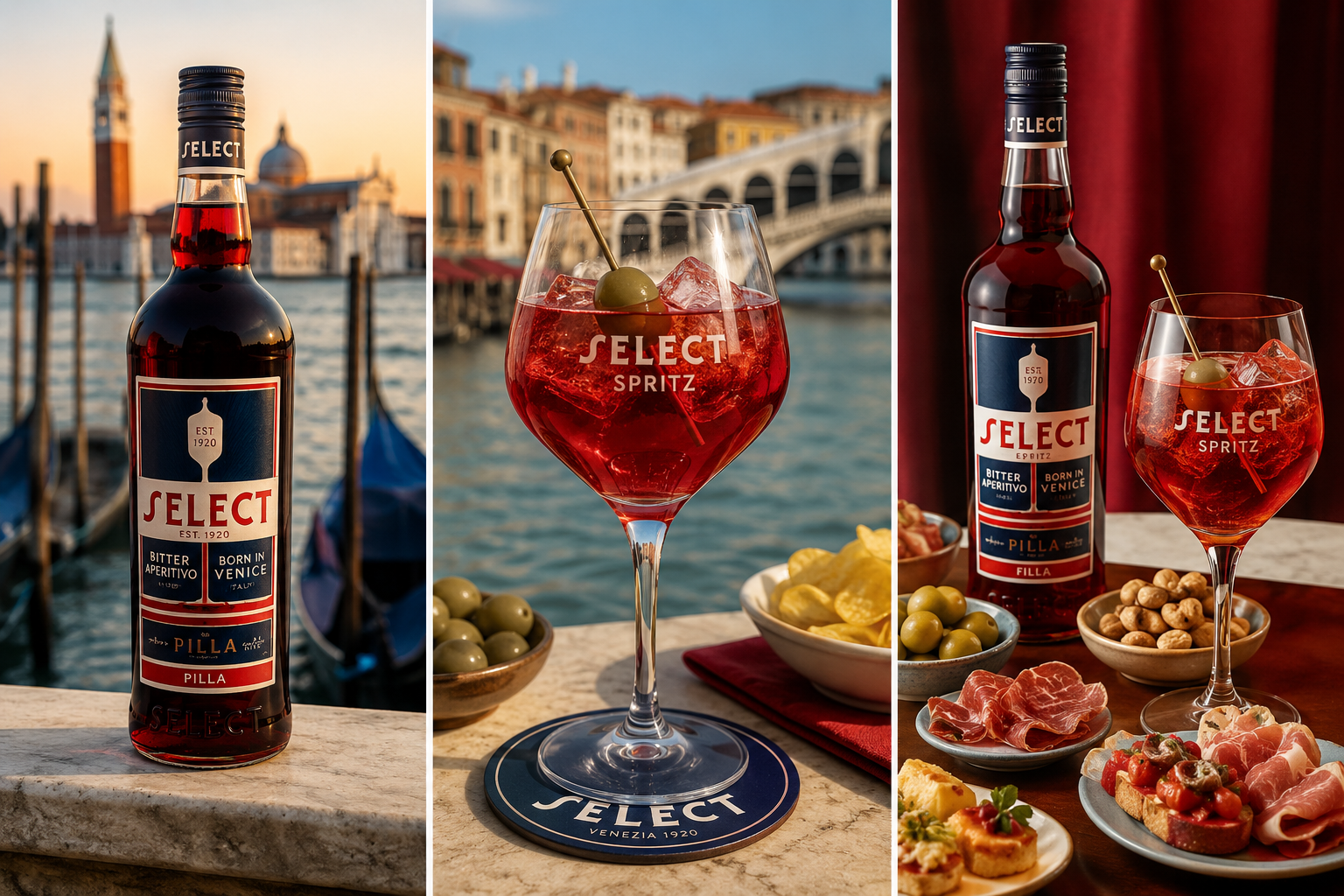
The popular Spritz cocktail is most often associated with the orange aperitif Aperol. However, it is far from the only liqueur used in this quintessential summer drink. In fact, Aperol even has a rival vying for the title of the “canonical” Spritz.
That rival is Select bitter aperitivo, which is drier and spicier than Aperol. Both liqueurs originated in the same region—Veneto—at roughly the same time, so it is only natural that they compete for the title of the “authentic” choice for a Spritz.
Select was born in Venice in 1920
In 1920, brothers Mario and Vittorio Pilla created a new bittersweet aperitif named Select (from the Latin «selectus», meaning “choice” or “selected”). They founded their company, Fratelli Pilla & C., in Venice’s historic Castello district. Unlike many modern cocktail brands, Select was conceived from the very beginning for the evening «aperitivo» ritual—a drink meant to be enjoyed before a meal and while socializing.
Venice and «aperitivo» culture
In the first half of the 20th century, the aperitivo became an essential part of Venetian city culture. After the workday, locals would meet in bars to unwind and discuss the day’s events over a glass of wine or an aperitif before dinner. Select fit perfectly into this drinking culture thanks to its distinctive bitterness, which stimulated the appetite, and its relatively low alcohol content, making it suitable as an «aperitivo» rather than a potent digestif. Thus, Select gradually became a Venetian tradition.
Select’s Ingredients and Recipe: Juniper and Rhubarb
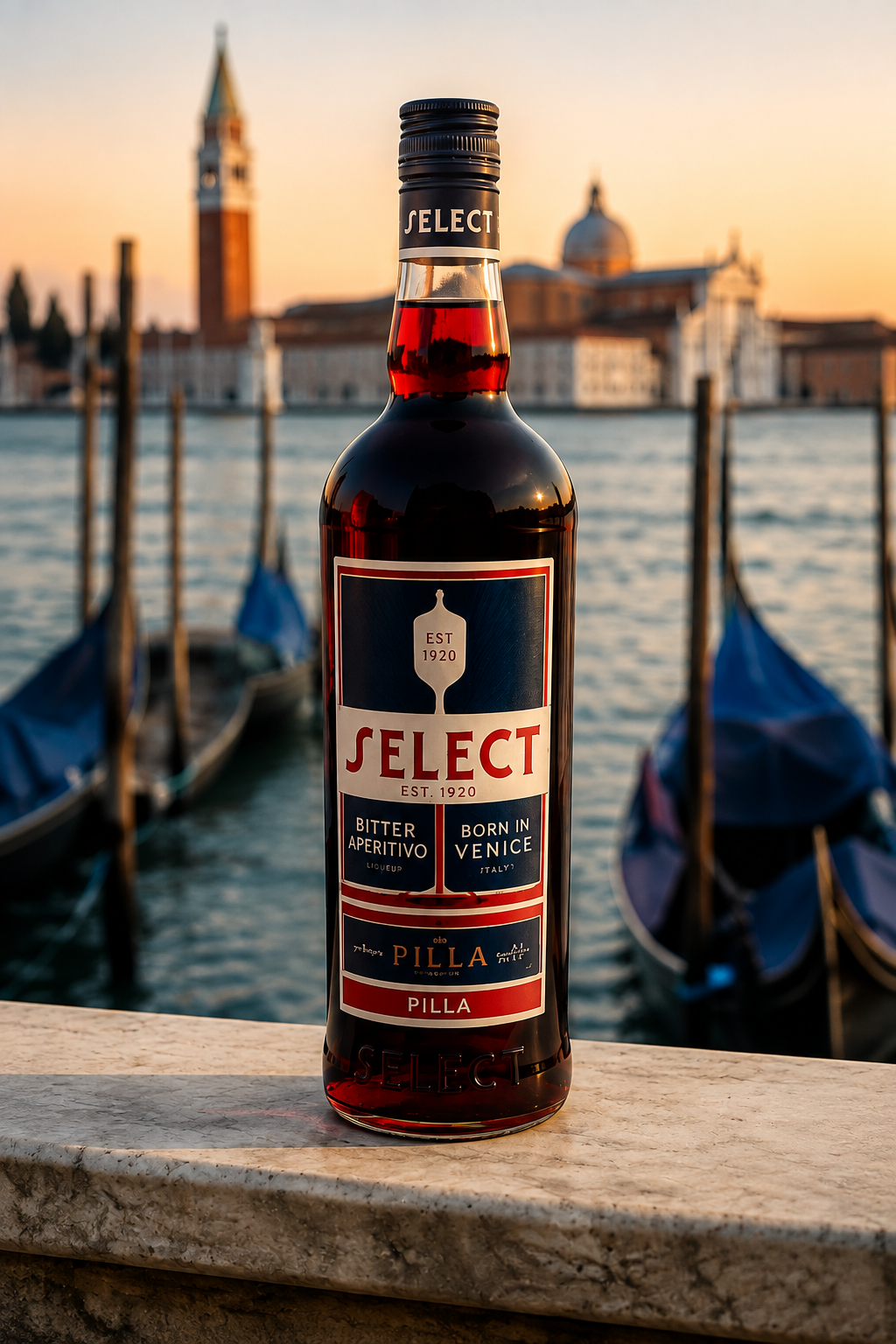
Select is made from 30 ingredients, the key ones being rhubarb root and juniper berries. These define the drink’s character, which the manufacturer describes as “floral, herbal, citrusy, balsamic, and spicy.” Rhubarb root provides Select’s characteristic bitterness and earthy undertones (as well as, most likely, its vibrant ruby-red color with a pinkish hue), while juniper contributes resinous, balsamic, and spicy nuances. The ingredients undergo separate maceration and distillation processes before being blended in precise proportions to create Select’s distinctive taste.
As a result, Select’s flavor differs noticeably from the mild, citrus-forward Aperol:
- pronounced yet balanced bitterness, offset by sweetness;
- herbal and spicy notes;
- subtle balsamic undertones;
- a light citrus character that refreshes Select’s profile without adding bold orange notes;
Why is a Select Spritz served with an olive?
The classic modern recipe is identical to that of the Aperol Spritz:
3 parts Prosecco + 2 parts Select + 1 part soda water
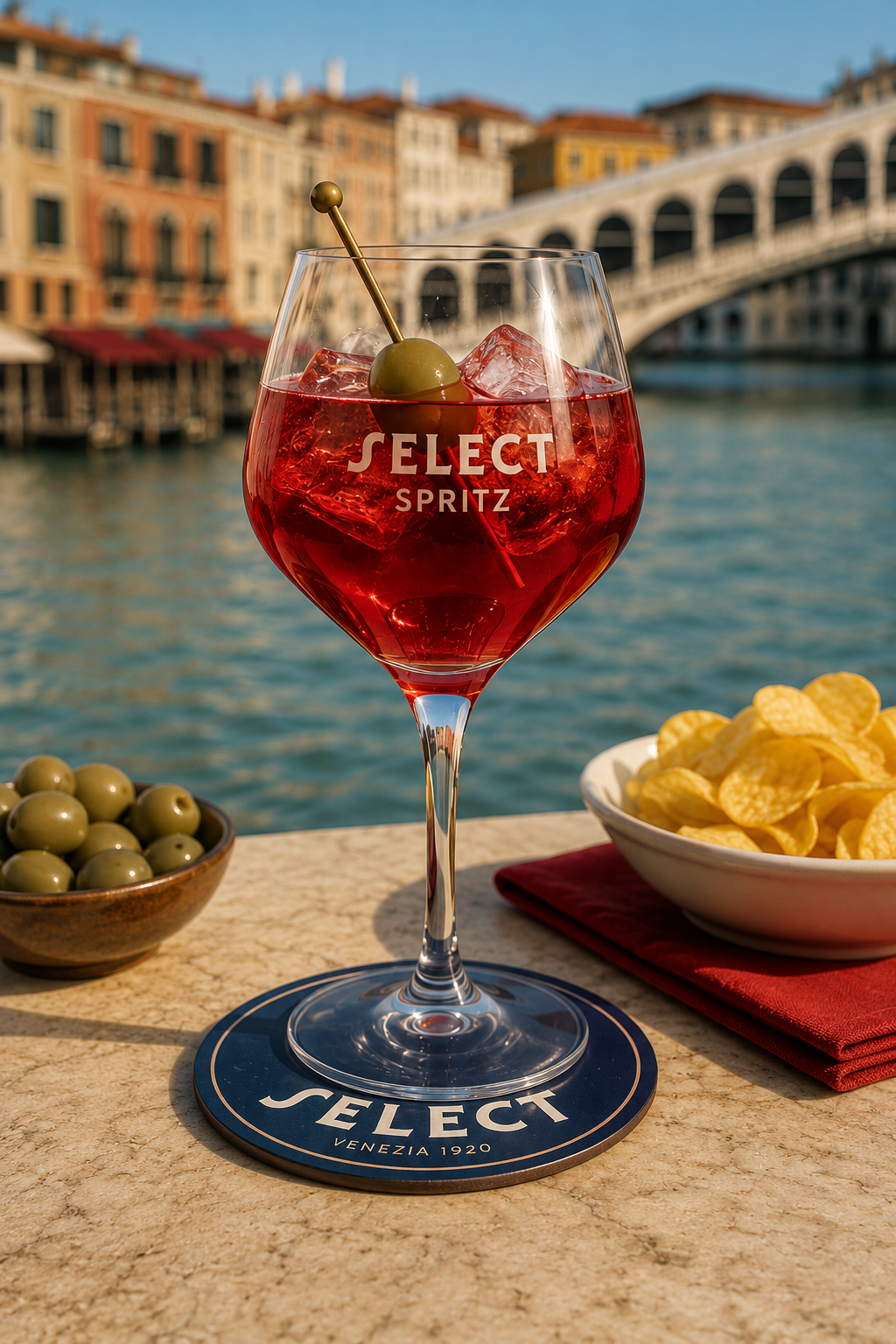
The cocktail is also served over ice, but instead of an orange slice, it is garnished with a green olive. Visually, this highlights the cocktail’s Venetian identity, while adding savory, salty, and umami notes that pair beautifully with the bitterness and complexity of Select.
Select and the history of the Venetian Spritz
It is worth noting that the Spritz drink predates Select. Its origins lie in the period of Austrian rule in the Veneto region; Austrian soldiers, finding local Italian wines not to their liking, would dilute them with water (read more about the history of the Spritz in the article on Aperol). In the 20th century, the Spritz evolved into a cocktail made with various bitter aperitifs, Prosecco, and soda water.
In Venice—and the Veneto region more broadly—Select became the key ingredient for the Spritz, and the drink itself came to be known as the Venetian Spritz.
Aperol or Select? Which Spritz is the “real” one?
The global popularity and widespread fame of the Aperol Spritz might give the impression that Aperol is the historical “original” Spritz. That is not quite the case. Although both drinks were created just a year apart in cities within the Veneto region (Aperol debuted in Padua in 1919, while Select appeared in Venice in 1920), the two brands subsequently followed different paths.
Aperol developed a style that is more citrusy, sweet, and light—one that aligns with modern international aperitivo culture and appeals to the tastes of the majority of consumers.
Select, by contrast, has maintained a closer connection to Venice and local tradition.
That is precisely why, for many Venetians, the Select Spritz remains not merely an alternative to the Aperol Spritz, but an expression of its own unique traditions.
The History of Select’s Industrial Production
As the company expanded, Select’s production became linked to the Porto Marghera industrial zone in Venice—an area that suffered significant damage during World War II. Production was subsequently relocated to the island of Murano, famous for its glassmaking, and the company continued to grow beyond Venice itself. Yet, the brand never lost its connection to the city of its birth.
In 2020, Select celebrated its centenary, an occasion that served to reaffirm its bond with Venice. In 2023, Ca’ Select opened in Venice—a space dedicated to the brand’s history, production, and the culture of the Venetian Spritz. After decades of development outside the historic center, Select had returned to its hometown.
Select, Aperol, and Campari: Three Distinct Personalities
While all three drinks belong to the category of Italian bitter aperitifs, their flavor profiles differ significantly. Select:
- Origin: Venice
- Character: Spicy, herbaceous, medium-sweet
- Bitterness: Medium/pronounced
- Color: Ruby red
- Classic Spritz: Select Spritz (Venetian Spritz)
- Garnish: Olive
Aperol:
- Origin: Padua
- Character: Mellow, citrusy, sweeter
- Bitterness: Moderate
- Color: Bright red-orange
- Classic Spritz: Aperol Spritz
- Garnish: Orange
Campari:
- Origin: Novara and Milan
- Character: Intense, bitter, less perceptible sweetness
- Bitterness: High
- Color: Bright red
- Classic Spritz: Campari Spritz
- Garnish: Orange
Select occupies a middle ground: more bitter than Aperol but smoother than Campari, giving it remarkable versatility and natural appeal—both as an *aperitivo* and as a cocktail ingredient.
Select Spritz: Recipe and Pairings
As with other liqueurs, the formula for the Select Spritz remains constant:
- 90 ml Prosecco
- 60 ml Select
- 30 ml soda water
- Ice
- Green olive
The ingredients are combined in a large wine glass or a dedicated Spritz glass filled with plenty of ice. The drink is traditionally garnished with a green olive—a choice made for both aesthetic and flavor reasons.
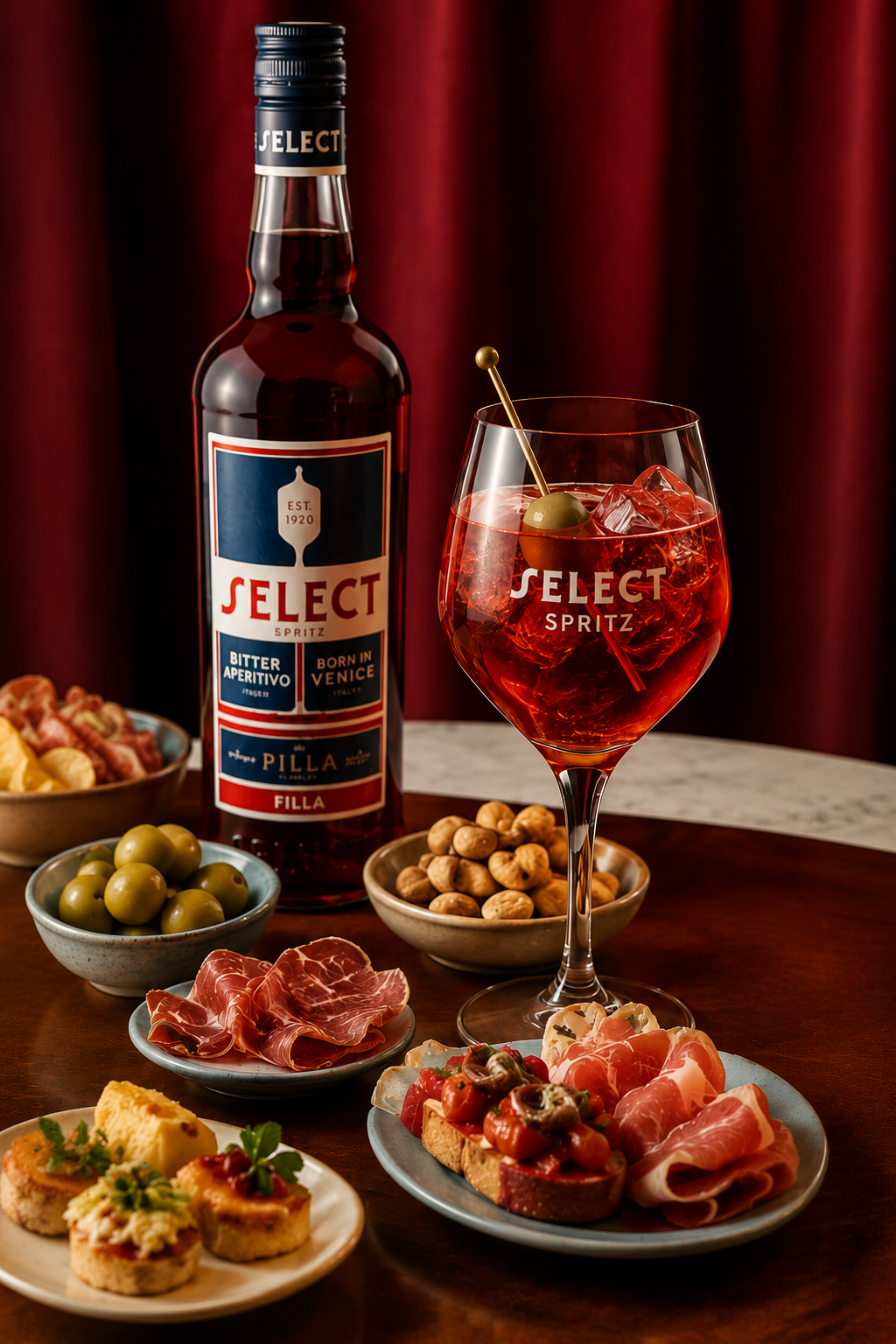
Thanks to its distinct bitterness and spicy notes, the Select Spritz pairs beautifully with salty and savory snacks.
Particularly excellent pairings include:
- cicchetti — traditional Venetian snacks;
- olives;
- anchovies;
- breaded seafood;
- prosciutto and other cured meats with a strong umami flavor;
- medium-aged cheeses;
- bruschetta;
- pickled vegetables.
This is where the culinary character of Select truly shines: it is not merely a refreshing cocktail, but a complete *aperitivo* experience.
Select — The Taste of Venice
Select is not just another Italian red liqueur.
It represents a local Venetian *aperitivo* tradition that has seamlessly integrated into modern cocktail culture while preserving its heritage and connection to its home city of Venice.
Prosecco, Select, soda, and a green olive—four elements that encapsulate the entire history of the Venetian aperitivo and offer a fresh take on the famous Italian cocktail: less sweet, yet more bitter, spicy, and food-friendly.