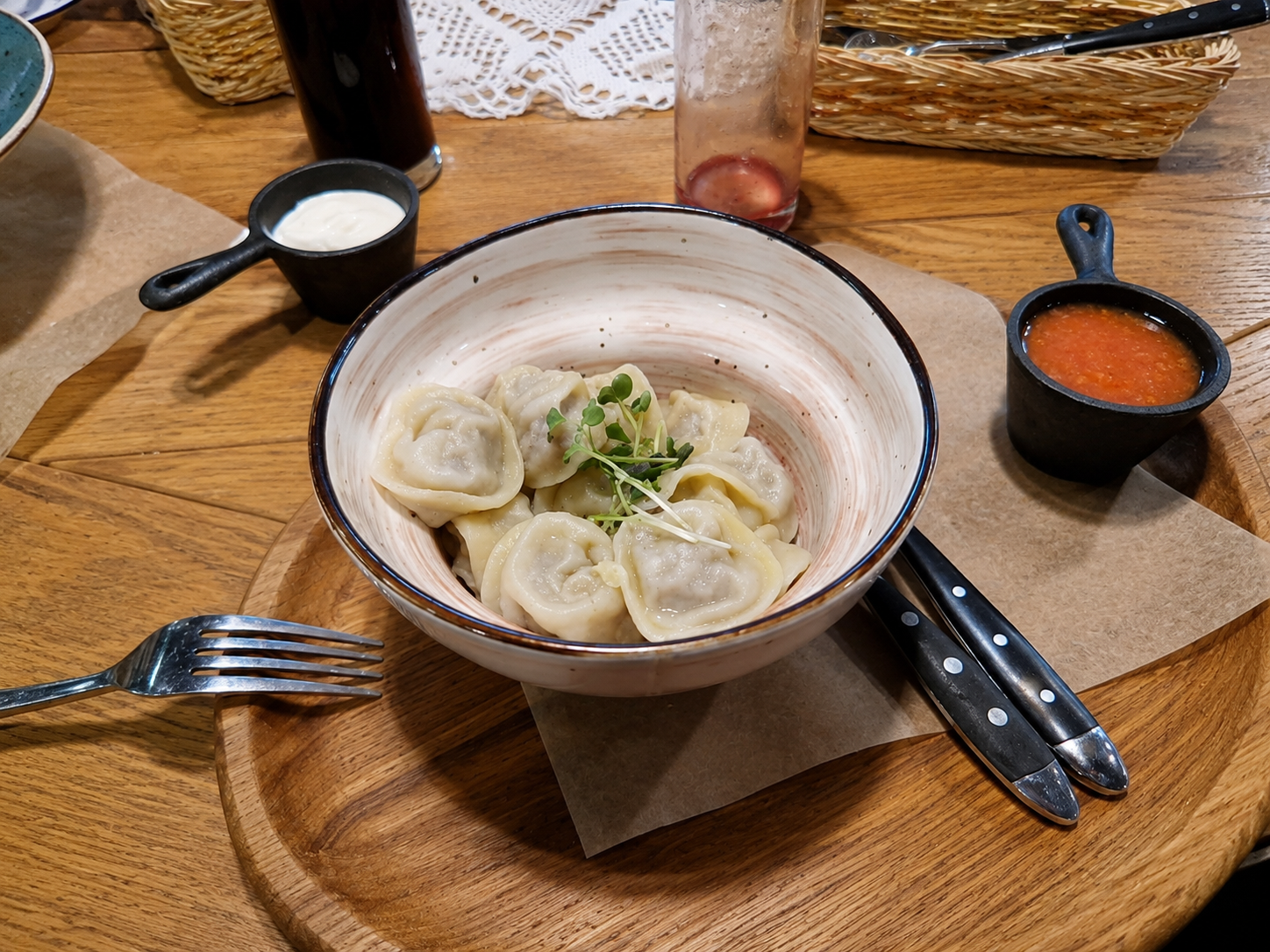
Pelmeni are often associated with simple home cooking, yet from a gastronomic point of view, they are far more interesting. Their thin, neutral dough and diverse fillings—complemented by spices, sour cream, vinegar, tomato sauce, or broth—create a wide array of flavor profiles that call for different wine pairings.
That is precisely why it is difficult to recommend a single wine—or even a single varietal—for pelmeni across the board. Meat-filled pelmeni pair well with red or rosé wines, depending on the meat and spices used; mushroom and fish versions suit white wines; while richer fillings like salmon or cheese can even be paired with sparkling wines.
This selection features 8 pelmeni recipes and specific wine appellations to help you choose a wine tailored not just to “pelmeni” in general, but to the specific filling and serving style (whether in broth, with sauce, or with sour cream).
How to pair wine with pelmeni?
When choosing a wine, consider four key factors:
- the richness of the filling—the higher the fat content, the more important wine acidity becomes to balance it;
- the intensity of the meat’s flavor—lamb and duck require a more robust wine than chicken, veal, or white fish;
- spices—pepper, cumin, and spicy sauces pair best with wines that are spicy or fruit-forward and low in tannins;
- sauce — sour cream, butter, vinegar, and tomato sauce can completely transform the character of the pairing.
In the article on wine and food pairing principles, I discuss the interaction of these components in detail, as well as the specific reasons why red wine pairs so well with red meat.
Let’s look at each component of the pelmeni serving to better understand how to choose a wine for this comforting dish:
-
- filling:
- meat (beef + pork, beef + lamb) naturally calls for red wine. Since the filling has a pronounced flavor (spicy or simply peppery), the wine should have a rich flavor profile—at least medium-bodied—but with moderate tannins. Low to moderate astringency helps avoid unpleasant bitterness, harsh tannins, and the burning sensation of alcohol when the wine interacts with spices.
- Fish (cod, zander, salmon): For white fish with a delicate flavor and lower fat content, a light white wine with good acidity is suitable; for fattier fish, a slightly richer wine works well—even sparkling wine is an option. In any case, it is best to avoid full-bodied, oak-aged Chardonnays.
- Chicken: Here, too, a medium-bodied white wine works well—one with enough richness to complement the chicken’s texture, which is denser than that of fish.
-
- Sauce:
- Sour cream: Its mild, milky flavor with a hint of tanginess calls for a fruity, low-astringency wine with comparable acidity. You might choose a wine with lower astringency than you would if serving it without the sour cream (see my article on wine and cheese pairing for an explanation of how milk proteins interact with wine).
- Spicy tomato sauce: When serving with meat-filled dumplings, you might choose a red wine with high acidity and low astringency; this harmonizes with the acidity of the tomatoes without accentuating astringency or the alcohol’s burning sensation.
- Vinegar: In my opinion, it is best to avoid this ingredient if you plan to serve wine with the dumplings. A strong vinegar taste will overpower any wine.
Key principle: Consider all the components of this dish—which may seem simple at first glance but is actually complex—to ensure that no single ingredient overpowers the flavor of the wine.
Pelmeni Recipes and Wine Pairings
Next, we will examine pairings for the most famous pelmeni recipes, looking at the flavor characteristics of the dishes and explaining why specific wines create the most harmonious combinations.
We will not focus on the dough recipe—as it is generally quite neutral in flavor—but will instead look more closely at the fillings and sauces.
1. Classic Siberian Pelmeni with Beef and Pork
This recipe uses equal parts beef and pork for the filling, along with onion, salt, and black pepper; the two types of meat are the defining flavor components. Classic Siberian pelmeni can be served with sour cream, butter, or—for those who prefer it—a slightly spicy tomato sauce.
Wines: Beaujolais-Villages Rouge, Bordeaux Rouge, Bourgogne Pinot Noir, Primitivo Puglia IGT
These pairings work harmoniously thanks to the rounded flavor profiles of the grape varieties involved (Gamay for Beaujolais; predominantly Merlot for Bordeaux; Pinot Noir for Burgundy; and Primitivo for the Apulian appellation of the same name). They possess a pronounced fruity character (red berries, cherry), juiciness, soft tannins, and sufficient acidity, yet they lack a pronounced oak or barrel influence. Such wines will not feel heavy, astringent, or harsh when paired with meat; they offer refreshing acidity and harmonize well with sour cream.
2. Pelmeni with lamb, onion, and cumin
Lamb calls for a more expressive wine, especially when the filling contains spices like cumin and coriander. The other ingredients are classic: onion, salt, and black pepper. These pelmeni can be served with a light, refreshing sour cream and herb sauce to ensure the overall flavor profile remains balanced rather than overly intense.
Wines: Crozes-Hermitage Rouge, Gigondas Rouge, Languedoc Rouge, Georgian Saperavi wines
The first wine is primarily Syrah; the second is a Grenache-Syrah-Mourvèdre blend; the third can be either a similar blend or a single-varietal wine; and the fourth is typically pure Saperavi, produced using either modern or traditional (qvevri) methods. The first three wines pair well with the lamb and spices in the filling, thanks to the spicy notes characteristic of Syrah, the juiciness of Grenache, and the expressiveness and body of Mourvèdre, which imparts meaty or smoky undertones. The fourth wine (Georgian Saperavi) offers a classic, successful pairing due to its notes of dark berries, pepper, and spices.
3. Pelmeni with lamb and spicy tomato sauce
This recipe is similar to the previous example, but the wine pairing changes due to the spicy sauce. The filling consists of lamb, onion, black pepper, and coriander, while the sauce features tomatoes, garlic, hot pepper, and sometimes adjika.
Wines: Côtes-du-Rhône Villages Rouge, Vacqueyras or Gigondas, Bandol Rouge, Australian Shiraz-Grenache-Mourvèdre
Pairing wine with the combination of bold lamb flavors and spicy sauce is challenging. A blend of fruity, rounded Grenache and slightly peppery Syrah works well: it softens the heat of the tomato sauce while adding peppery and spicy notes, and the earthy character of Mourvèdre harmonizes with the expressive lamb. However, opt for either aged wines from these appellations or fruit-forward cuvées; the density and astringency of young, traditionally styled wines in this category would clash with the spicy sauce.
4. Pork and Caramelized Onion Pelmeni
The flavor profile here is completely different: fatty pork paired with the sweetness of onion (a classic combination, much like foie gras with jam or cheese with jam). The wine needs to be fresh and high in acidity, yet possess sufficient structure. The recipe calls for pork, onions sautéed in butter, salt, and black pepper.
Wines: Pinot Gris (Alsace), Gewurztraminer (Collio), Côtes de Roussillon (Grenache Blanc)
In this instance, a white wine is preferable to a red, as red wines often clash with the sweetness found in dishes (in this case, the caramelized onions). However, the white wine shouldn’t be too light or overly acidic—like a Sauvignon Blanc from Entre-Deux-Mers or a dry German Riesling from the Mosel. In contrast, a Pinot Gris from Alsace or Northern Italy (Trentino-Alto Adige or Friuli) offers a full-bodied texture substantial enough for pork, while retaining acidity and even a hint of sweetness derived from fruit flavors rather than residual sugar. The spicy notes in these wines pair beautifully with caramelized onions. A dry Gewürztraminer from the Collio region in northeastern Italy also features a rounded texture and expressive spicy notes with tropical fruit characteristics (lychee, rose, and dried ginger are hallmarks of this variety), making it an excellent match for the sweetish onions. A modern-style White Grenache from Roussillon in southern France is a fairly full-bodied dry white wine; its good acidity balances flavors of sweet fruit (peach, apricot, and sometimes tropical notes), making it another suitable pairing for this dumpling recipe.
5. Chicken and Wild Mushroom Pelmeni
The recipe calls for white chicken meat and wild mushrooms (such as chanterelles or porcini, though button mushrooms can also be used) sautéed in butter with onions, seasoned with white pepper, thyme, and salt. A cream-based sauce or sour cream makes the most harmonious accompaniment.
Wines: Bourgogne Chardonnay, Beaujolais Blanc, California Chardonnay
The characteristic flavor profile of Chardonnay wines—featuring subtle stone fruit notes (peach, apricot, sometimes yellow plum) balanced by citrus acidity and complemented by creamy or even vanilla undertones (when barrel-aged)—pairs well with chicken, the umami qualities of mushrooms, and the creamy notes found in sauces and sour cream. There are countless examples of such wines, as Chardonnay is a highly versatile grape variety grown worldwide in diverse climates:
- Burgundy: Bourgogne Blanc, Monthélie, Meursault
- California: Carneros, Sonoma, Napa
- Languedoc: Limoux…
The selection of Chardonnay wines is vast, but for a dish like dumplings with chicken, mushrooms, and a cream sauce or sour cream, the best choice is a wine with moderate body, good acidity, and brief oak aging with malolactic fermentation—qualities that impart subtle creamy and nutty notes.
6. Pelmeni with potato and porcini mushrooms
In this version of the recipe, chicken is replaced by potato; the dumplings can be served with sour cream or butter, or you can even experiment with a cheese sauce or grated cheese.
Wines: Sancerre Blanc, Mâcon Blanc, Graves Blanc
Sauvignon Blanc—the grape variety behind Sancerre (Loire Valley) and Graves (Bordeaux)—is characterized by minerality, acidity, and freshness. These qualities create a pleasing contrast with the starchy texture of the potato and the earthy character of the mushrooms, while the wines still possess enough richness and body to harmonize with cheese or sour cream. Mâcon Blanc from Burgundy—a Chardonnay-based wine that is moderately full-bodied, fruity, food-friendly, and highly versatile—is an excellent option for Chardonnay lovers.
7. Fish Pelmeni with zander (pike-perch)
The filling ingredients include:
- zander fillet
- onion
- butter
- dill
- white pepper
- salt
These Pelmeni can also be served with sour cream or butter and sprinkled with dill. 🍷 Wines: Muscadet Sèvre-et-Maine Sur Lie, Bordeaux Blanc, Sancerre Blanc
Pairing with these wines—made from Melon de Bourgogne, a blend of Sauvignon Blanc and Sémillon, and Sauvignon Blanc, respectively—relies on freshness. Their high acidity highlights the fish and cleanses the palate after the butter, while also adding a complementary creamy note.
8. Salmon, Dill, and Cream Cheese Pelmeni
This pelmeni recipe is modern rather than traditional, yet it deserves attention for its culinary appeal. The filling consists of chopped salmon mixed with cream cheese, herbs (dill, green onions), lemon zest, salt, and white pepper.
Unlike zander, salmon is a fattier fish; therefore, wine acidity is crucial here to create a fresh, harmonious pairing.
Wines: Champagne Brut, Chablis Premier Cru, Pouilly-Fumé, Crémant de Bourgogne
Sparkling wines with a dosage of Brut or lower (Champagne, Crémant, Prosecco) make for an especially successful pairing. Their acidity and bubbles balance the richness of the salmon, while the bready, creamy nuances of aged sparkling wine complement the dough and cream cheese.
If you prefer still wines, choose those that have seen little to no oak aging, as the process imparts oak tannins that clash with fatty fish. Good choices include Chablis Premier Cru, Pouilly-Fumé, and Muscadet.
Why isn’t red wine always the best choice?
Of course, red wine pairs wonderfully with spiced lamb fillings or traditional Siberian pelmeni (dumplings). However, if the filling features white meat (chicken, pork)—or especially fish or mushrooms served with a creamy sauce or butter—a bold, tannic red wine can taste harsh and bitter. It won’t do the dish any favors either; this clash is particularly noticeable with:
- chicken;
- fish;
- sour cream;
- cream sauces;
- mushrooms.
Red wine lovers should opt for lighter varieties like Pinot Noir or Gamay rather than bold ones like Cabernet Sauvignon or Syrah.
For fish, mushroom, or cream-sauce Pelmeni, white wine is often a better choice than red.
Best wine pairings for pelmeni
If you were to select just five pelmeni and sauce combinations for a wine tasting, you could create the following menu:
- Siberian pelmeni + sour cream or tomato sauce: Beaujolais-Villages. A versatile pairing.
- Mushroom and chicken pelmeni + sour cream: Bourgogne Chardonnay. A perfect example of pairing the earthy aromas of mushrooms with the freshness and texture of Chardonnay.
- Lamb pelmeni + sour cream or tomato sauce: Crozes-Hermitage. The spiciness of Syrah and the flavor of the lamb create a natural pairing.
- Fish pelmeni + sour cream or butter: Muscadet Sèvre-et-Maine.
Freshness, minerality, and a light creamy nuance
Conclusion
Pelmeni deserve to be viewed not merely as a simple home-cooked dish, but also as an interesting subject for wine pairings.
Fruity Gamay, mineral-driven Muscadet or Sancerre, a slightly creamy Chardonnay from Burgundy, or Champagne—the choice of wine is determined primarily by the filling, fat content, spices, and sauce.
That is precisely why there is no such thing as a universal “wine for pelmeni.” However, there are many interesting pairings—and each one reveals a different facet of the dish.