Italicus Rosolio di Bergamotto is a modern Italian liqueur that appeared just ten years ago. Yet, its history is rooted in the much older tradition of «rosolio»—one of Italy’s historic sweet, aromatized liqueurs and aperitifs.
When did rosolio originate?
The earliest references to «rosolio» date back to the mid-15th century. According to «The Oxford Companion to Spirits & Cocktails», rosolio was produced in northeastern Italy during this period and even exported to the courts of the Duke of Burgundy and King Edward IV of England. The producer of Italicus notes that the drink was also served at the court of the House of Savoy as an «aperitivo di corte» — a “court aperitif”. The term «rosolio» is traditionally linked to the Latin phrase «ros solis», meaning “sun dew” (rather than the rose flower, as one might initially assume, although roses were indeed used as an aromatic ingredient). One theory suggests the name “sun dew” was chosen deliberately: the ingredients—aromatic herbs and flowers—were typically gathered early in the morning before the dew had evaporated.
By the 17th century, rosolio had evolved into a category of sweet, aromatized liqueurs served at royal courts, banquets, and family celebrations—whether as an aperitif, a digestif, or alongside a meal. In the 18th and 19th centuries, rosolio became widely popular across Italy. Each region developed its own recipes based on local flora and fruit—such as rose, mint, or citrus.
By the 18th century, the drink was already known beyond Italy’s borders. By the 19th century, rosolio had evolved into a distinct category of sweet, aromatic liqueurs—smooth, sugary, and fragrant—prized precisely for these qualities. Thus, rosolio is not a single drink with a specific date of origin, but rather an entire category and a long-standing Italian tradition that took shape during the 17th and 18th centuries.
However, tastes shifted toward bitter drinks—such as vermouths, bitter aperitifs, and amaro—during the 19th and 20th centuries; consequently, rosolio gradually lost its former prominence and faded from the bar scene. Decades later, it was this nearly forgotten category that served as the inspiration for the creation of Italicus.
How Rosolio Became Italicus
In 2016, Giuseppe Gallo — a renowned Italian mixology expert—effectively revived the nearly forgotten rosolio tradition. He spent a full year experimenting with quintessentially Italian ingredients and drawing upon historical recipes to craft a modern interpretation of this historic liquor, transforming it into a versatile cocktail ingredient. On September 1, 2016, his creation, Italicus Rosolio di Bergamotto, was introduced to the global market, targeting key hubs of modern cocktail culture: London, Milan, and New York.
Bergamot: The Key Ingredient in Italicus
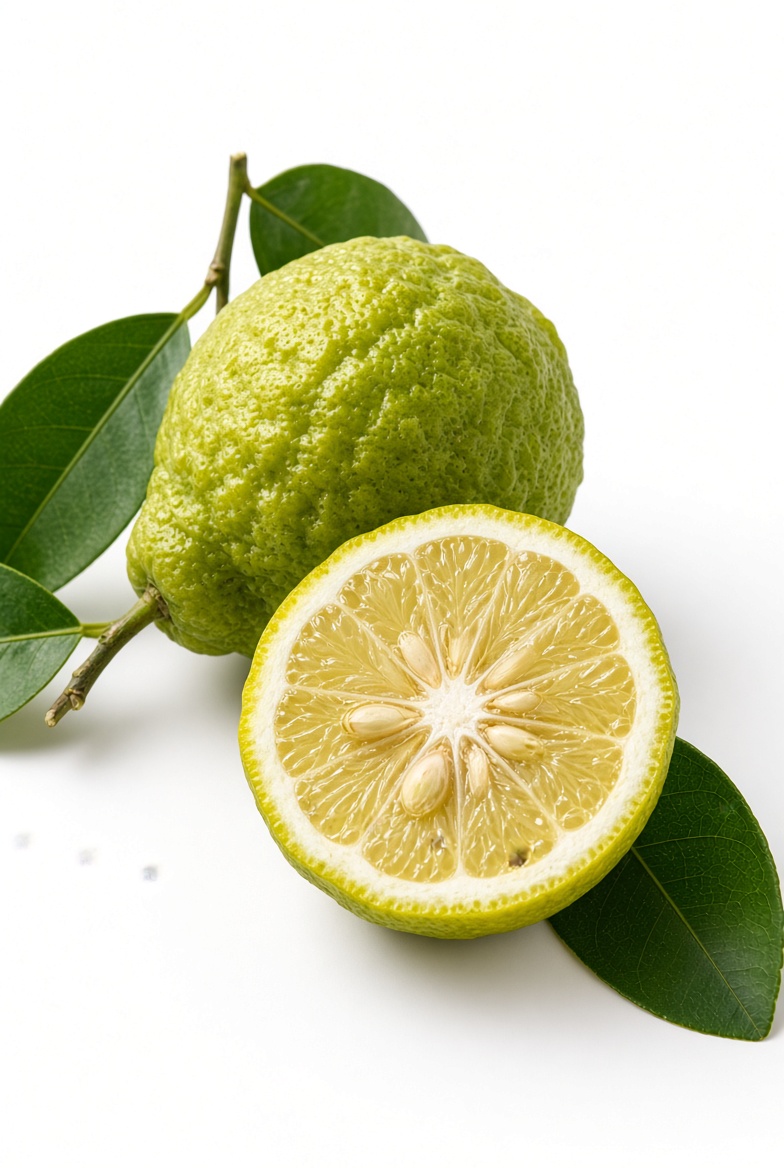
Calabrian bergamot (Citrus bergamia) — bearing the Protected Geographical Indication (IGP) status—is the primary component of Italicus. It imparts a distinctive character that blends the citrus, floral, bitter, and subtly smoky notes typical of the fruit.
The flavor profile is further enriched by botanicals and citrus fruits sourced from various regions across Italy:
- Sicilian citron;
- chamomile;
- lavender;
- gentian;
- yellow rose;
- lemon balm.
With a moderate alcohol content of 20% ABV, a pronounced citrusy bergamot aroma, and a delicate floral character, Italicus is particularly well-suited for refreshing summer cocktails.
Complex Production Techniques
The refined and elegant character of Italicus is achieved by employing distinct techniques for its various ingredients, which are then blended into a harmonious bouquet. The traditional “sfumatura” method is used for bergamot and citron to extract essential oils from the peel, while floral and herbal components undergo separate maceration. The final blend yields a liqueur that combines citrus notes with floral and herbal aromas and a hint of bitterness.
A Concept Evoking Italy
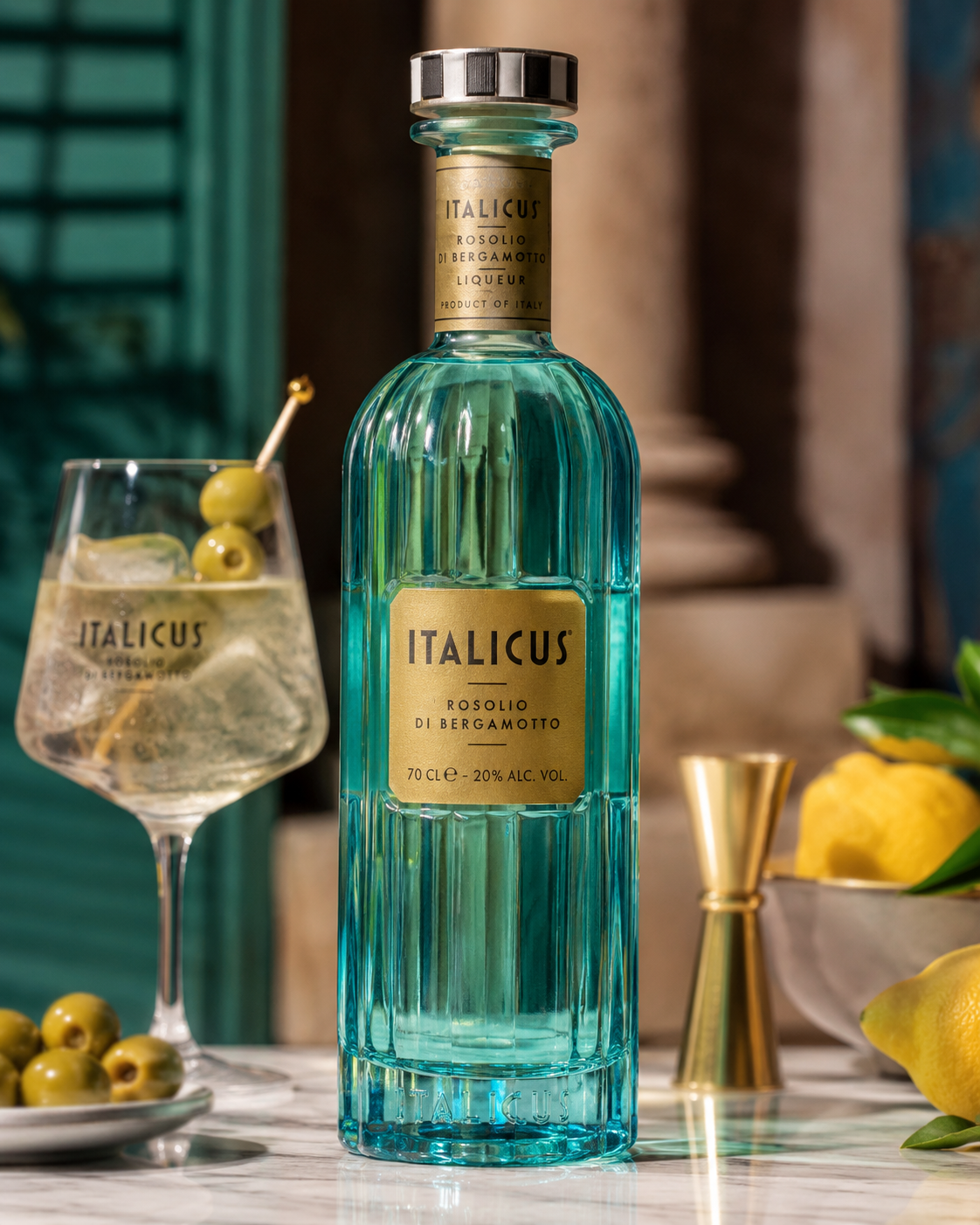
The bottle’s distinctive ribbed design immediately catches the eye; it evokes classical architecture and the columns of ancient Roman temples, underscoring the brand’s connection to Italian history, while its azure hue calls to mind the Mediterranean Sea.
“Italicus” is a Latin word meaning “Italic” or “pertaining to Italy,” and the word itself naturally evokes the country’s name, “Italia”.
Thus, Italicus bridges ancient Italian traditions with modernity—a concept defining a brand that is far more than just a citrus liqueur. Every part of its name carries significance:
- Italicus – alludes to Italy
- Rosolio – references the traditional drink revived by the creator of Italicus
- di Bergamotto – highlights the liqueur’s key ingredient
From Forgotten Drink to Modern Cocktails
The Italicus website features recipes for original and intriguing cocktails, the most famous of which is the Italicus Spritz.
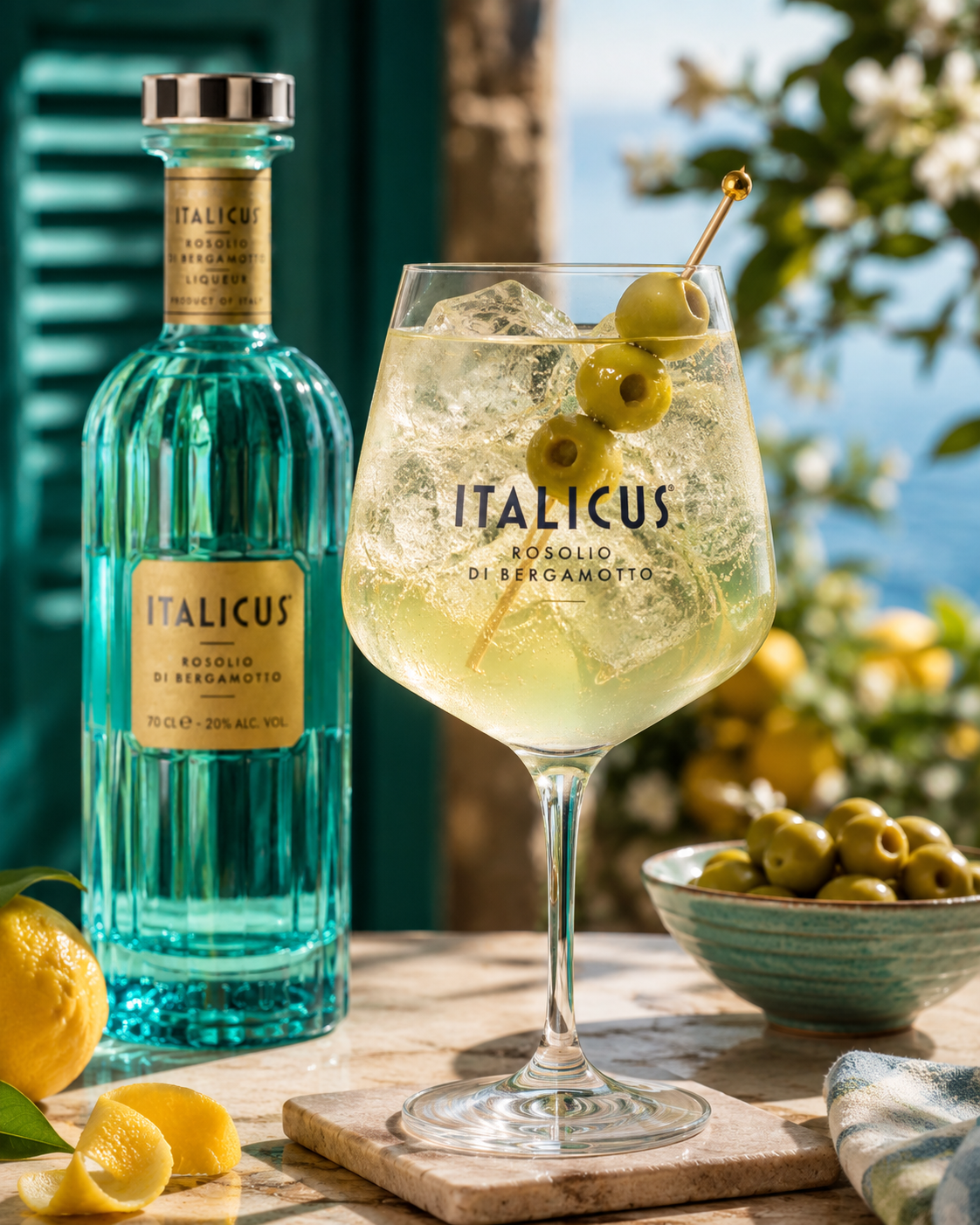
The classic serve combines Italicus using the classic formula (3 parts Prosecco, 2 parts liqueur, and 1 part soda), ice, and a garnish of three green olives.
The Italicus Spritz has become a key way to introduce the general public to a new incarnation of Italian “rosolio” — a variation on the popular spritz cocktail.
Unlike an Aperol or Campari Spritz, Italicus boasts a completely different aromatic profile. Here, rather than orange or herbal bitterness taking center stage, notes of bergamot, citrus, flowers, and herbs come to the fore, while the bitterness itself is barely perceptible.
This airier spritz pairs well with:
- green olives;
- light antipasti;
- fresh cheeses;
- seafood;
- dishes with citrus accents;
- light desserts
.
Why exactly three green olives?
One of the most recognizable features of Italicus cocktails (and not just the Italicus Spritz, as can be seen on the producer’s website) is the traditional garnish of three green olives. The olives highlight the drink’s Italian origins and its connection to long-standing Italian tradition, while also creating a contrast with the bergamot aroma: the saltiness and slight bitterness of the olives make the citrus-floral profile of Italicus stand out more vividly.
Why is Italicus interesting from a historical perspective?
The story of Italicus is compelling because it is not merely a recreation of a forgotten Italian liqueur recipe, but a modern reimagining of a nearly extinct category of spirits. Italicus blends several historical and contemporary trends:
- the tradition of Italian rosolio;
- the use of regional citrus and botanicals, characteristic of the drink’s production;
- Italian aperitivo culture;
- the modern cocktail industry;
- an interest in historical recipes and the revival of forgotten categories of spirits.