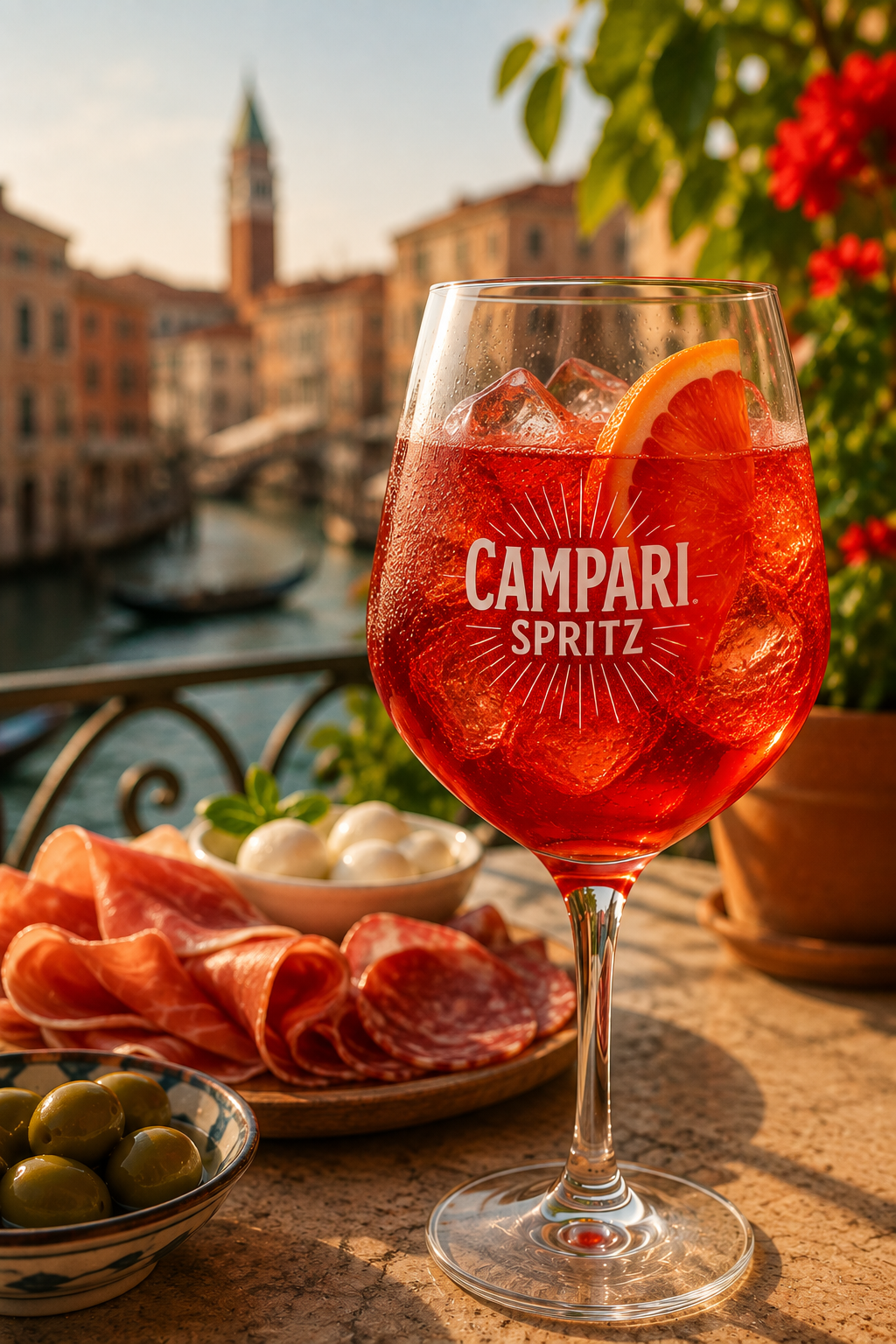
Continuing my series on the iconic summer cocktail, the Spritz, I simply must mention the liqueur Campari. Let’s start with a few intriguing facts:
- Campari predates Aperol
- The Aperol brand and production rights are owned by the Campari Group.
- Campari is more closely linked to mixology and cocktails than Aperol, as it is a key ingredient in other classics: the Negroni, Americano, Boulevardier, and, of course, the Campari Spritz.
Why is Aperol considered one of today’s most popular aperitifs? How does it differ from Campari—a drink that can rightfully be called a legendary Italian bitter? My new article covers its history, its rise to popularity, and a few details about its composition—a recipe that has, naturally, remained a closely guarded secret for over 160 years.
The Creation of Campari
Campari was created in 1860 by the talented Italian liqueur maker Gaspare Campari. After years of experimenting with infusions of herbs, fruits, and spices—and drawing inspiration from Dutch bitters—he crafted a drink with a unique balance of bitterness, sweetness, and citrus notes.
Campari was originally produced in the city of Novara (Piedmont), where Gaspare Campari worked on creating liqueurs alongside pastry chef Teofilo Barla and fellow liqueur maker Giacomo Bass. It was in Novara—specifically at the local “Caffè dell’Amicizia”—that the new drink could first be tasted. Later, Gaspare moved to Milan, where, in 1867, he opened the famous “Caffè Campari” in the newly built Galleria Vittorio Emanuele II, right next to the Duomo. It was here that the new bitter quickly became a favorite among the people of Milan, including renowned artists and creative figures.
Today, Campari is used to prepare many classic cocktails—such as the Americano, Negroni, Milano-Torino, Garibaldi, Boulevardier, and Spritz—and is distributed in over 190 countries.
A Secret Recipe
As with Aperol, the recipe for Campari is a closely guarded secret. The exact number of ingredients is not disclosed, though some sources suggest there are around 60, including:
- bitter oranges;
- aromatic herbs;
- roots;
- spices;
- tree bark;
- citrus fruits.
It is this complex blend that gives Campari its distinctive flavor profile: intense bitterness, citrus notes, hints of spicy herbs, and a long, dry finish.
Why Campari Has its Specific Red Colour?
Its vibrant red color has become one of the brand’s hallmarks. Originally, the natural dye carmine was used to achieve this hue, but in 2006, the manufacturer switched entirely to modern food colorings while preserving the drink’s signature color.
How Campari Became an International Brand
After Gaspare Campari’s death, his son Davide Campari took charge of the company’s development, promotion, and advertising. It was Davide who transformed the family business into an international brand. He closely observed the visitors of his establishments, as well as the evolving sociocultural landscape and trends of the era, to craft the most effective advertising campaigns.
The first advertisement for Campari—a short article—appeared in the “Corriere della Sera” newspaper on January 7, 1889. Next came advertising posters, and with the advent of television advertising, commercials aired during the “Il Carosello” program, which ran for 20 years (from 1957 to 1977). Campari collaborated with renowned artists, designers, and photographers, transforming the brand from a mere beverage into an integral part of 20th-century Italian artistic culture.
In the early 20th century, new production facilities opened, and Campari bottles began to be exported—first to other parts of Europe and eventually across the globe.
Campari and the Birth of Famous Cocktails
Campari’s complex flavor profile and distinct bitterness made it an ideal base for cocktails. The most famous among them include:
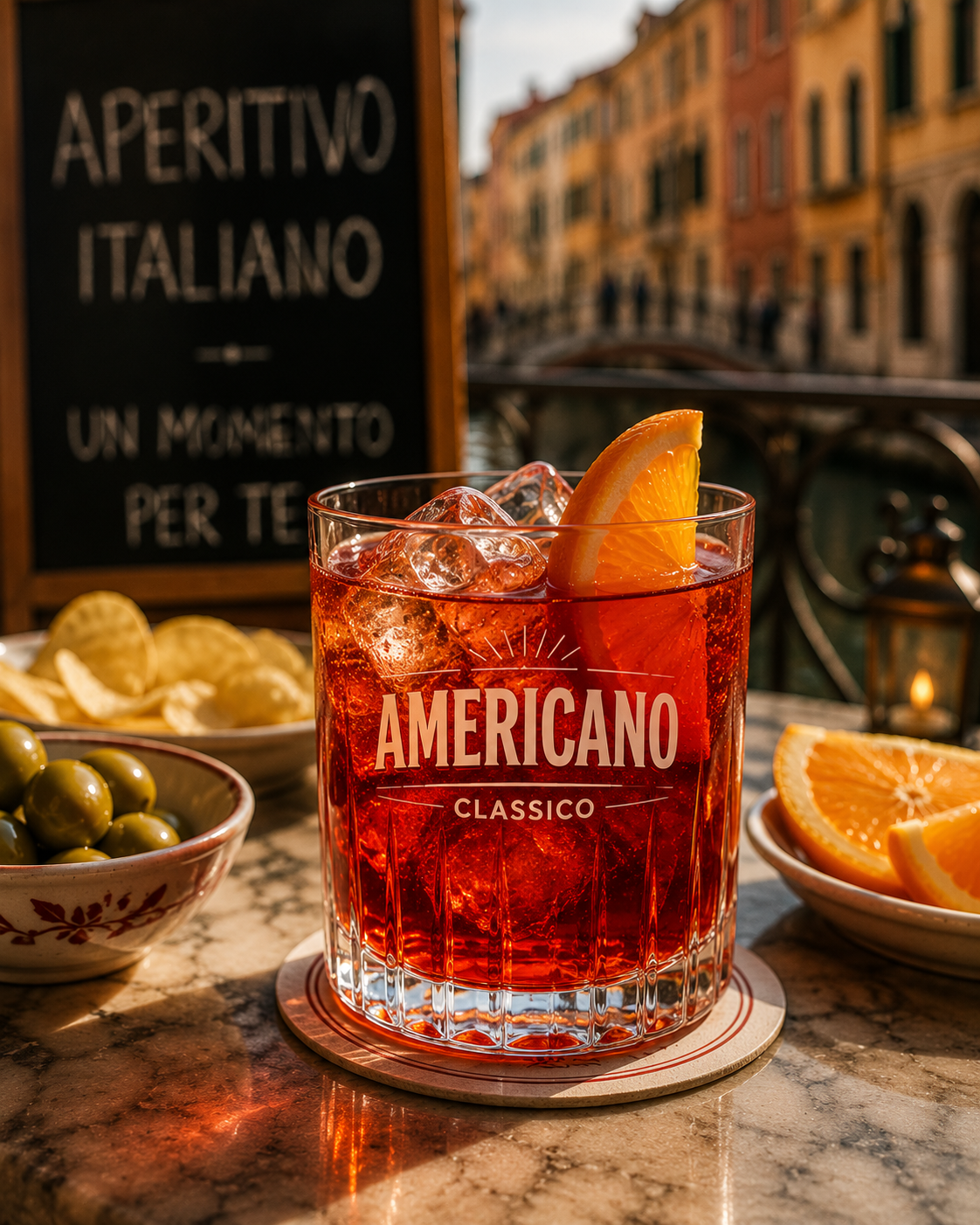
- The Americano: made with Campari, sweet red vermouth, and soda water.
- The Negroni: a classic featuring Campari, red vermouth, and gin.
- The Boulevardier: a French twist on the Negroni that substitutes bourbon for gin.
- And, of course, the Campari Spritz: prepared using the classic formula of 3 parts Prosecco, 2 parts Campari, and 1 part soda water. Compared to the Aperol Spritz—the rising popularity of which inspired this Campari-based variation—this cocktail is stronger, more bitter, and richer in flavor.
Campari Today
Today, Campari is sold in over 190 countries and stands as one of the most recognizable Italian spirits brands. It is part of the Campari Group portfolio, which encompasses dozens of famous brands, including the renowned Aperol.
Despite its global success, Campari has retained its distinctive identity: a complex, recognizable character with a pronounced bitterness that is unmistakable among other bitters.
Interesting Facts
- Campari was created in 1860, nearly 60 years before Aperol.
- The drink’s recipe is even more complex than Aperol’s and has remained a trade secret since Campari’s inception.
- Until 2006, natural carmine was used for coloring.
- Campari is a key ingredient in classic cocktails such as the Negroni, Americano, and Boulevardier.
- Milan is considered the historic home of Campari and a major hub of the Italian “aperitivo” culture.
Conclusion
Campari can rightfully be considered a symbol of Italian culinary culture. Its intense bitterness and complex sensory profile have made it a staple of classic aperitifs and an inspiration for generations of bartenders worldwide.
While Aperol is chosen for its lightness and citrusy freshness, Campari is prized for its depth of flavor, refined bitterness, and richness.