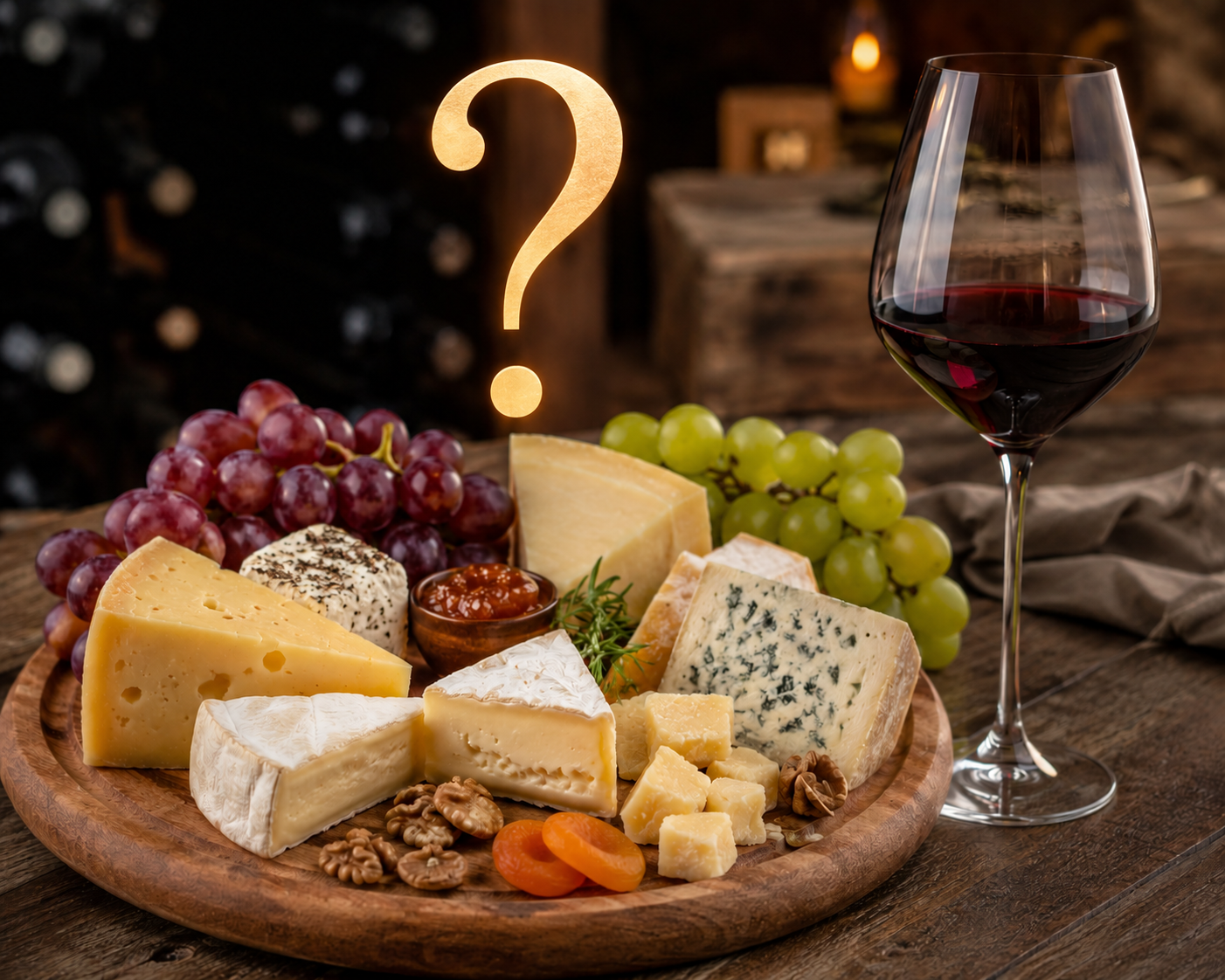
When the question arises of what appetizer to serve with red wine, the answer “cheese” seems correct and indisputable. But how well does this hold up in reality?
In fact, the situation is a bit more complex.
The traditional pairing of red wine and cheese dates back for centuries, but it did not originate from gastronomic considerations. According to one theory, shepherds and peasants would take simple foods—such as bread, cheese, and dried meat—and diluted red wine with them to the fields for lunch; the wine was safer to drink than plain water from natural sources. Because the wine was diluted, it had lower tannin levels and a milder flavor, avoiding any unpleasant interactions with the food (and, of course, no one was thinking about wine and food pairing back then).
Modern red wines are completely different. Firstly, nobody would think of diluting them with water today. Secondly, thanks to advancements in viticulture and winemaking flavor profiles and concentration of the wine became more complex and full-bodied.
So, why doesn’t red wine pair as well with cheese as tradition suggests? Here is the scientific explanation.
The Wrong Proteins
A previous article on pairing red wine with red meat explains why the combination works from a chemical standpoint: the harmonious interaction between tannins of red wine and proteins of meat. However, cheese also contains protein, so why does red wine often leave an unpleasant aftertaste when consumed with a piece of cheese?
Tannins readily bind to proteins. They can form hydrogen bonds and engage in hydrophobic interactions—molecular connections that avoid contact with water.
Casein, the milk protein found in cheese, is highly sensitive to tannins; consequently, it can interact with them in several ways and rapidly form larger molecular complexes. This negatively affects the flavor of both products:
- The wine’s astringency intensifies, sometimes even creating a sensation of dryness.
- A metallic or bitter aftertaste emerges, overpowering pleasant fruity notes.
- The cheese’s texture becomes gummy and pasty, or conversely, chalky/powdery.
Furthermore, cheese is often significantly fattier than meat, which creates a flavor imbalance; the cheese fats tend to “coat” the tannins, disrupting the wine’s balance. In contrast, the fat content in meat does not interfere with the harmonious interaction between tannins and proteins.
The worst red wine and cheese pairings:
- Soft cheeses with bloomy rinds (Brie, Camembert, Chaource, triple-crème): In addition to casein and high fat content—especially in triple-crème varieties—the lactic bacteria on the rind interact unfavorably with red wine.
- Soft cheeses with washed rinds (Munster, Pont-l’Évêque, Époisses, or cheeses washed in alcohol like liqueurs or Calvados): Here, the cheese’s own, often very pronounced, flavor and the distinctive notes of the washed rind accentuate unpleasant notes.
- Fresh cheeses with neutral flavors (Mozzarella, Burrata, Ricotta): These cheeses have a relatively neutral taste and lower fat content than soft cheeses, making it more likely that the wine will overpower the cheese’s flavor.
- Goat cheeses, particularly those with firm rinds (e.g., Crottin) or those with creamy textures and high fat content (e.g., Saint-Félicien or Saint-Marcellin). The effect will be similar to that of a soft-ripened cheese with a bloomy rind, but intensified by the distinctive flavor of goat cheese.
Pairing with a rather salty blue cheese is also far from ideal: while salt generally has a positive effect on wine (read more about flavor interactions here), the high salt content and flavor intensity of blue cheese will overpower the wine’s fruity bouquet.
If you prefer to stick to tradition
If you prefer red wine over white, or simply wish to follow tradition, here are a few tips for achieving the best red wine and cheese pairings:
• Choose wines that are not astringent, or those with soft, velvety tannins.
• Opt for young, unoaked wines, as barrels also impart oak tannins to the wine.
• Avoid complex, aged red wines (10, 15+ years old), as their multifaceted, delicate flavors will be lost against the taste of the cheese. Simple, young wines with barely perceptible or very mild astringency will pair much more harmoniously.
• Choose hard cheeses—even aged ones—that have lower moisture content and a slightly higher salt concentration (though less than in blue cheeses).
Examples of wines:
- Beaujolais-Villages (Gamay) – a moderately tannic, full-flavored, fruity, and easy-drinking wine
- Village-level Burgundy (Pinot Noir) – delicate wines with a fresh fruit profile, good acidity, and low level of tannins
- Regional Bordeaux (Merlot or blends) – a lighter-style red wine from this famous region that does not require long aging and drinks well while young
- Tuscan IGT wines and Chianti Classico – not overly tannic, sufficiently fruity, and with good acidity
- Young Rioja – fruity, easy-drinking, and moderately tannic
Examples of cheeses and wine pairings:
- Manchego (Spain) – a hard sheep’s milk cheese, can be aged or not. A young Rioja wine makes for a harmonious, “terroir-driven” pairing.
- Ossau-Iraty (France) – a firm sheep’s milk cheese from the Basque Country, also can be aged. A red Bordeaux or an Irouléguy red (a protected designation for wines made in the Basque Country using Bordeaux grape varieties) would also be a suitable regional match.
- Cantal, Salers (France) – firm, pressed cow’s milk cheeses from the Auvergne region. I recommend a local Pinot Noir from the Auvergne appellation.
- Comté (France) – a pleasant cheese with nutty and fruity notes from the Jura region. Maturation can range from 6–9 to 36–40 months, so the choice of red wine should depend on the cheese’s age. Pair a light Bordeaux, Beaujolais, or a local Pinot Noir or Poulsard with young Comté, and opt for fuller-bodied wines for aged versions.
- Pecorino (Italy) – an Italian sheep’s milk cheese, young or aged. It pairs well with the wines mentioned above as well as with Chianti Classico.
- Parmesan (Italy) – one of the most iconic Italian cheeses; it pairs beautifully with Lambrusco, a red sparkling wine from the same region of origin: Emilia-Romagna.
You could also add Cheddar (of various ages), Beaufort, Gruyère, and Emmental to this list… There is a vast array of cheeses from different countries, which could be alternatives for those from this article (the most famous), along with countless pairing possibilities. All that remains is to experiment.